 No TribeBack to the site
The plan · September 2026
How the event series starts, what it costs, and what comes after.
In brief
- What
- No Tribe is building a leadership ecosystem in Washington, D.C.: a club of leaders worth following, an academy for the next generation, and in time a building where both live. It starts with events.
- So far
- I have run events in D.C. for several years, from small dinners to a mentorship night with senior mentors to parties of over 150 people, and helped another community here grow. Details in section one.
- Now
- I am mapping the venues and the people who run events in D.C., meeting them one at a time, and starting the next series.
- Money
- There is a free tier of events, and I am starting there, but it is a constrained year. Funding unlocks a different set of events, dinners, rented rooms, bigger nights, and part-time help so I am not running everything alone. Section five shows both years.
- Vision
- The long-term goal is a physical space of our own, and eventually a full building. The event series builds the community and the momentum to get there. Rough budgets for both are at the end of this page.
01
What I have done so far.
For the last stretch I had to take a demanding full-time job to help financially support my parents. I left that job, and now this has a much larger slice of my attention.
I have been working on versions of this for a long time. The short list:
A community house
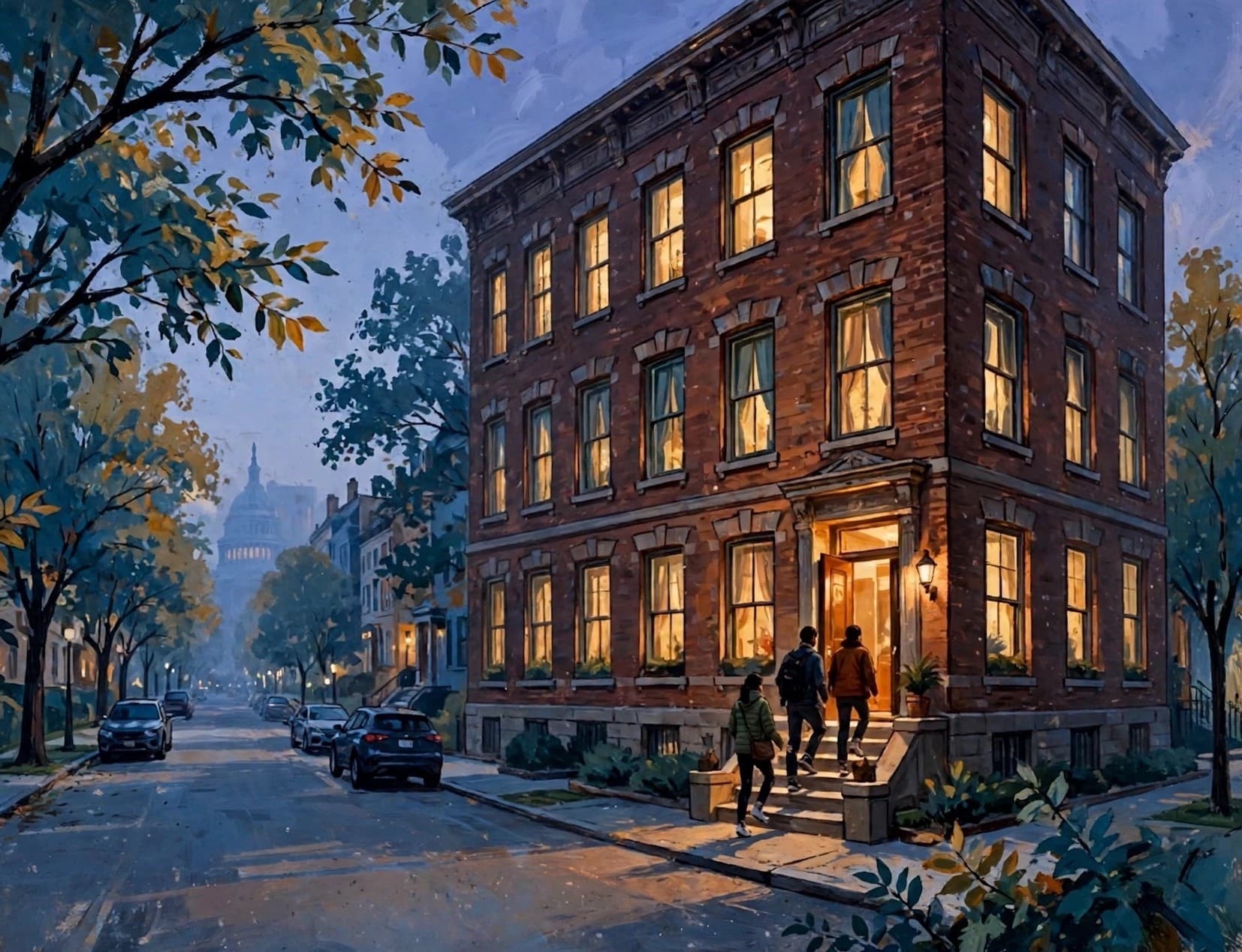
I came back to D.C. to help turn a large house into a community space, lived there, and ran the early events.
Speed mentorship, twenty mentors
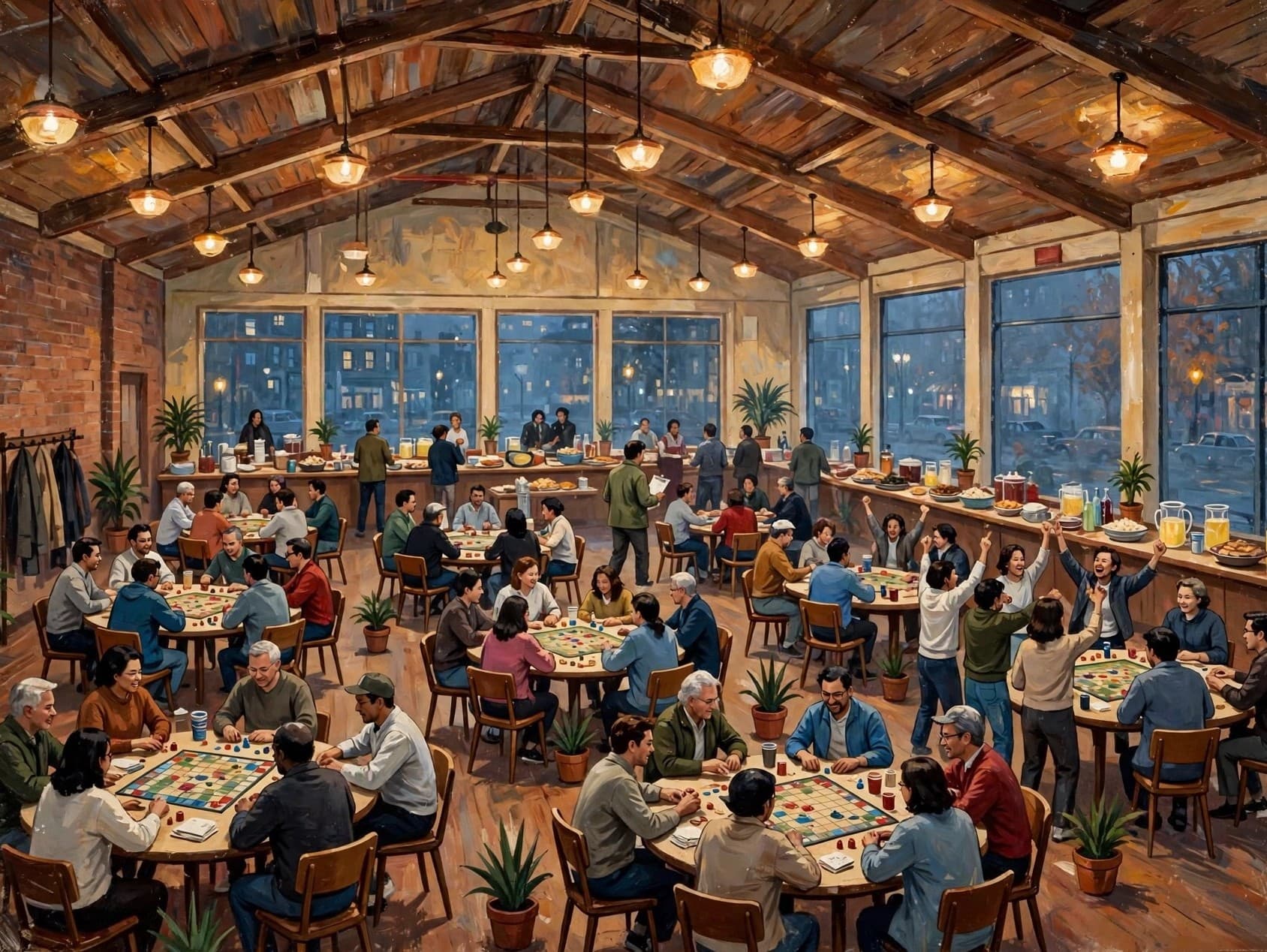
The biggest night at the house. About twenty senior mentors, among them Derek Thompson and Alex Tabarrok, across the table from the next generation.
Many additional events, both big and small
Dinners, talks, and working sessions at the house after that. Alongside them, bigger and more involved parties with over 150 guests, including a Halloween party that has grown every year.
A builders' club
I mentor and work with the founder of a club for people building with AI in D.C. In under a year it runs several events a month with over fifty people at each one.
A dinner series
Small dinners for specific people I want to talk to. The first brought together nonprofit executive directors.
02
The immediate next step.
An event series for event organizers
An event series for the people who run events in D.C. A community of practice: we trade what works and test new formats.
An events map of the city
I am building a map of every event venue and every event organizer in the city.
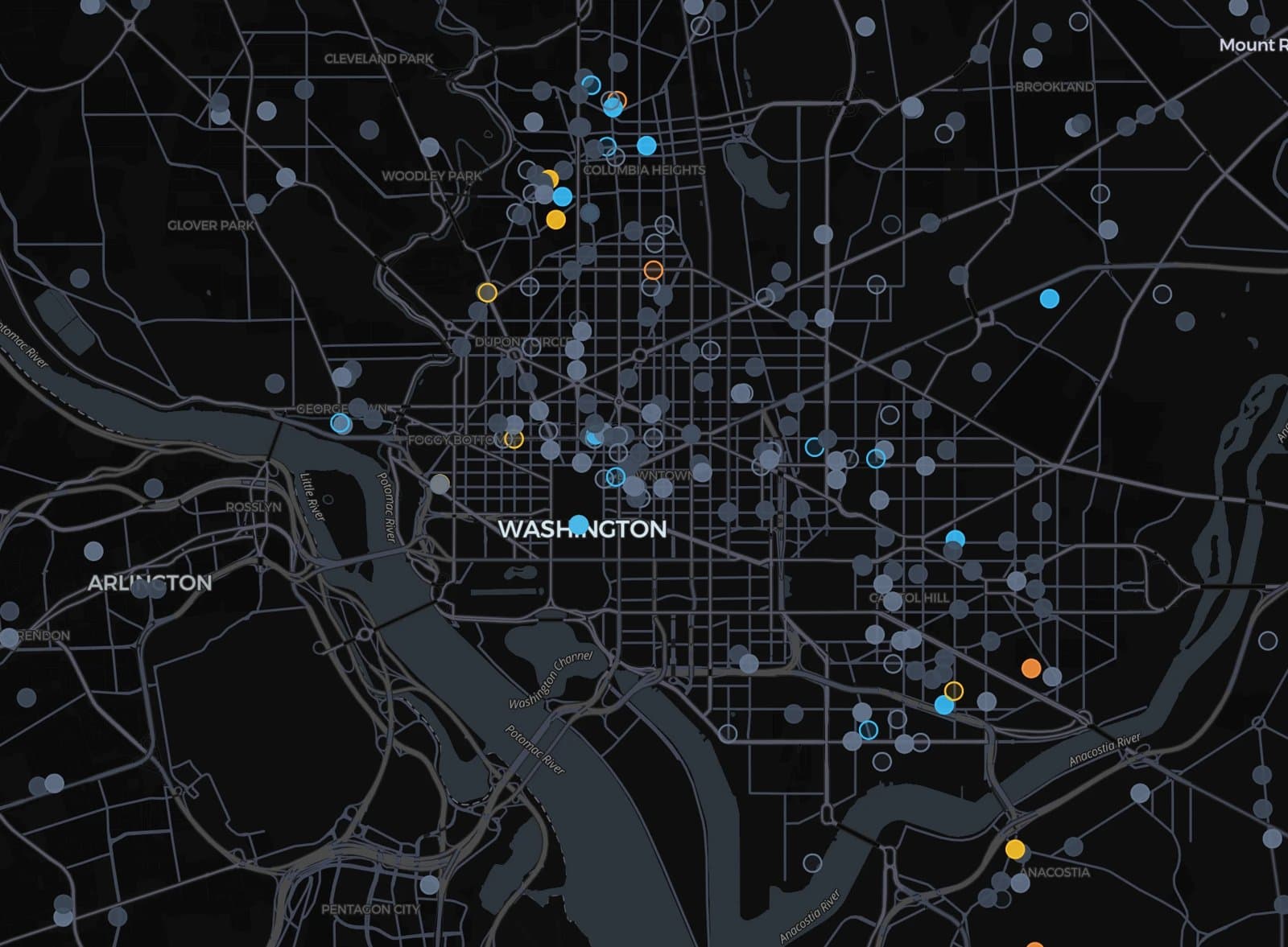
This is the groundwork for the rest of the series. The organizers are where I learn what works, find venues and partners, and try out formats before the bigger events below.
03
What makes these events different.
I go to a lot of events and most of them could be much better with small changes. Here is what I try to do differently.
Manage the connections
Most networking events rely on chance. It takes little effort to arrange the connections instead. Speed formats, and matching people in advance with AI where it helps, mean a guest arrives knowing they will meet four or five people relevant to what they said they need.
Get the right people in the room
Some events are public. For the rest, I decide who is invited and take time over it, because who is in the room decides what happens there.
The small details
Is each person greeted at the door? Introduced to someone? Given a reason to stay? These take little effort and most events skip them.
Repeat
When the goal is friendship rather than contacts, people need to see each other more than once. The series are designed so the same people meet repeatedly.
Participation, managed
Most events are passive. I add a part where the audience takes part, run so that a few loud voices do not dominate and it does not get disorganized.
Whatever an event is for, learning, connections, or inspiration, there are ways to run it that get more of that. The details are where the difference is.
04
What an event costs.
The cost of an event depends on its type, not its size. A dinner for twelve costs more than a talk for a hundred in a borrowed room. Four levels, with examples of each.
Free
Borrowed rooms, everyone brings something
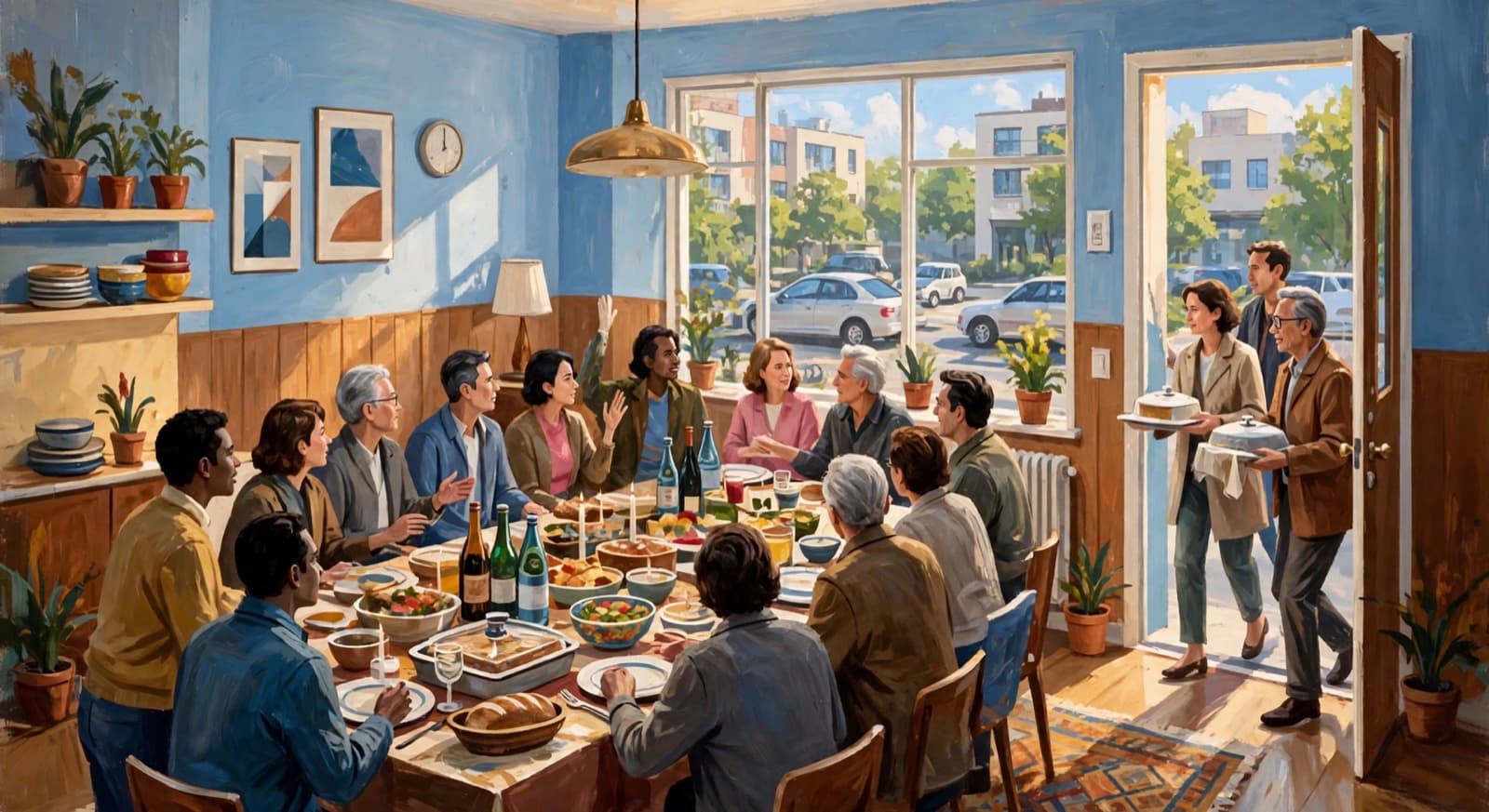
A borrowed room, a partner's space, or a home. Guests bring food or buy their own drinks. My time.
A potluck brunch that grows by one guest each
Starts with three people. Each brings one person the others have not met. A few months later it is a network, and the potluck keeps it free.
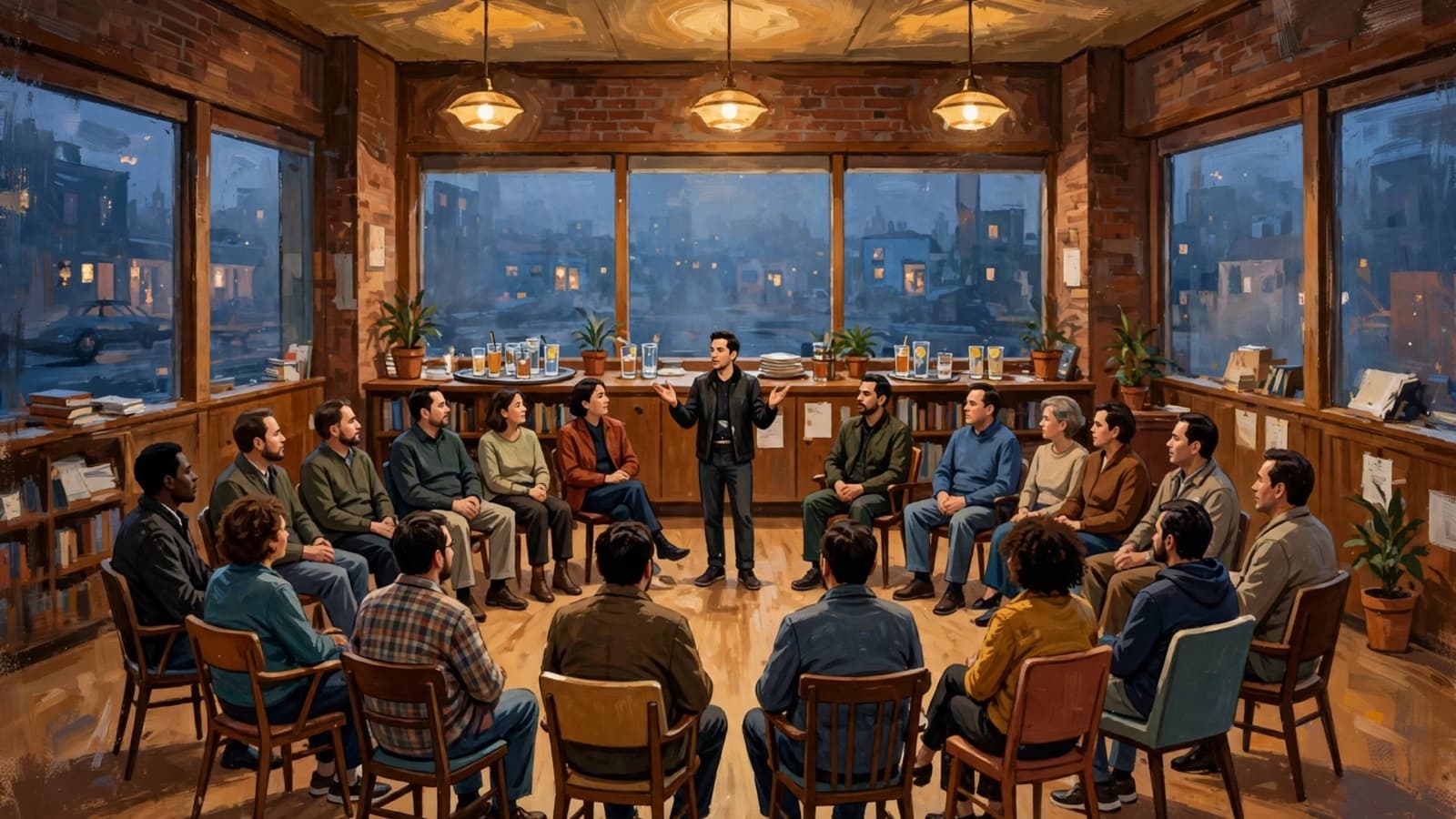
A meetup for the people who run events in D.C.
The organizers I am mapping, in one room, swapping what works. A community of practice, and the fastest way to find partners.
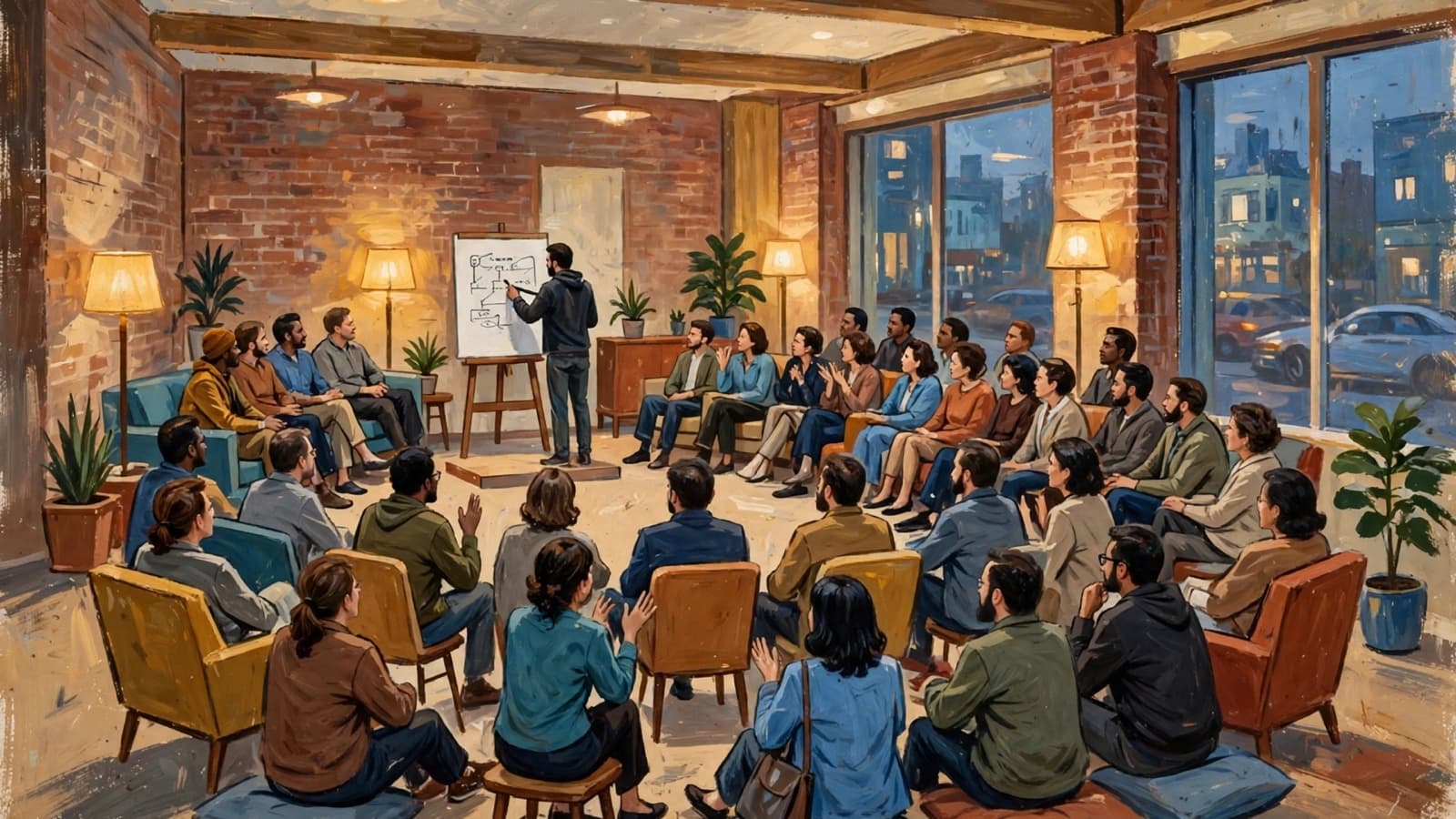
A problem clinic in a borrowed room
One leader brings a real problem, a small panel that has seen it before works on it out loud, and the room pitches in.
About $1,000
Drinks and snacks, or one small dinner
Drinks and snacks for sixty in a free venue, or a dinner for ten at a restaurant where I pick up the tab.
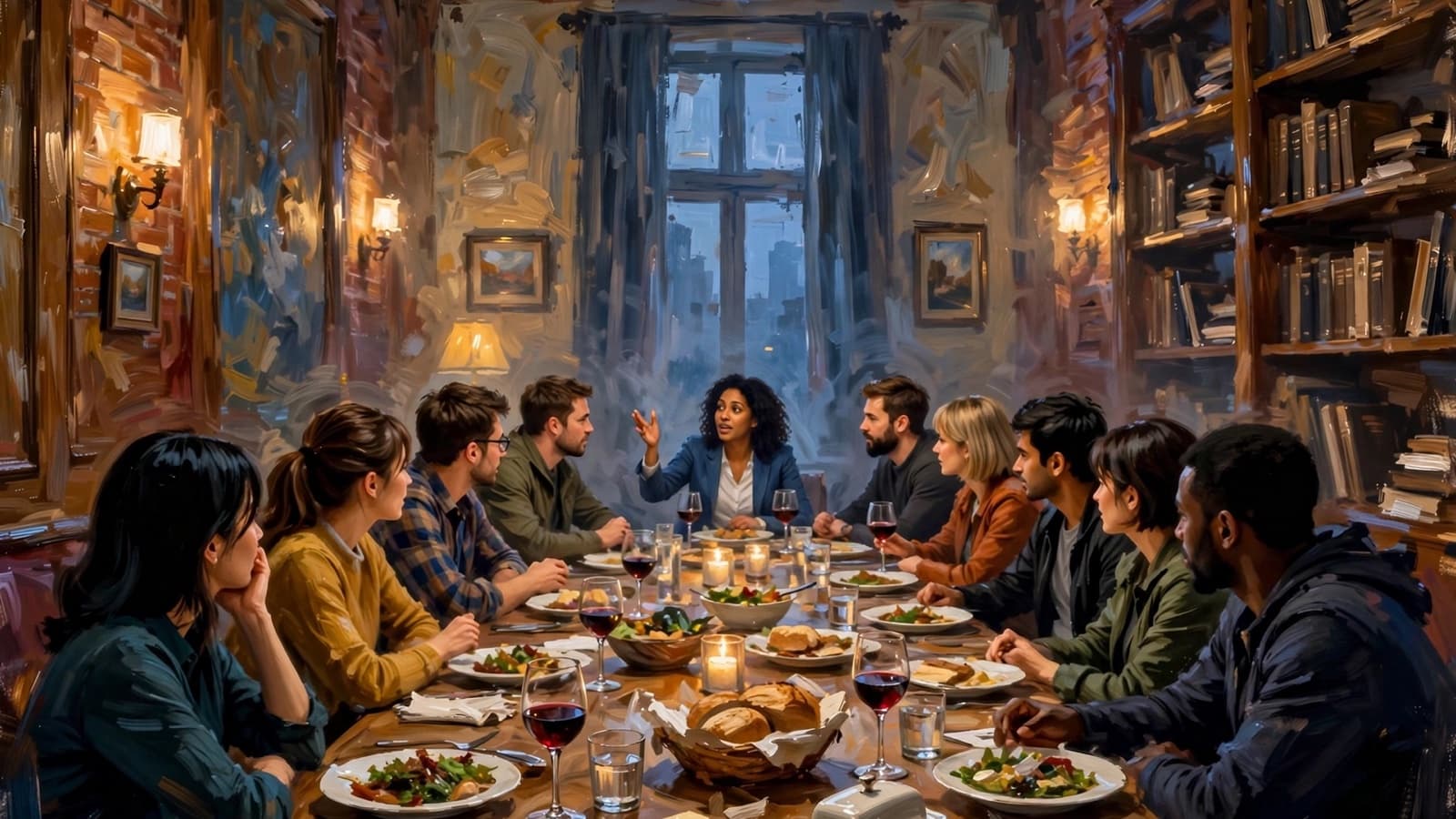
A mastermind dinner with people who run events
Ten people who run events, at a restaurant, and I ask how they would do this: fundraising, venues, what fails.
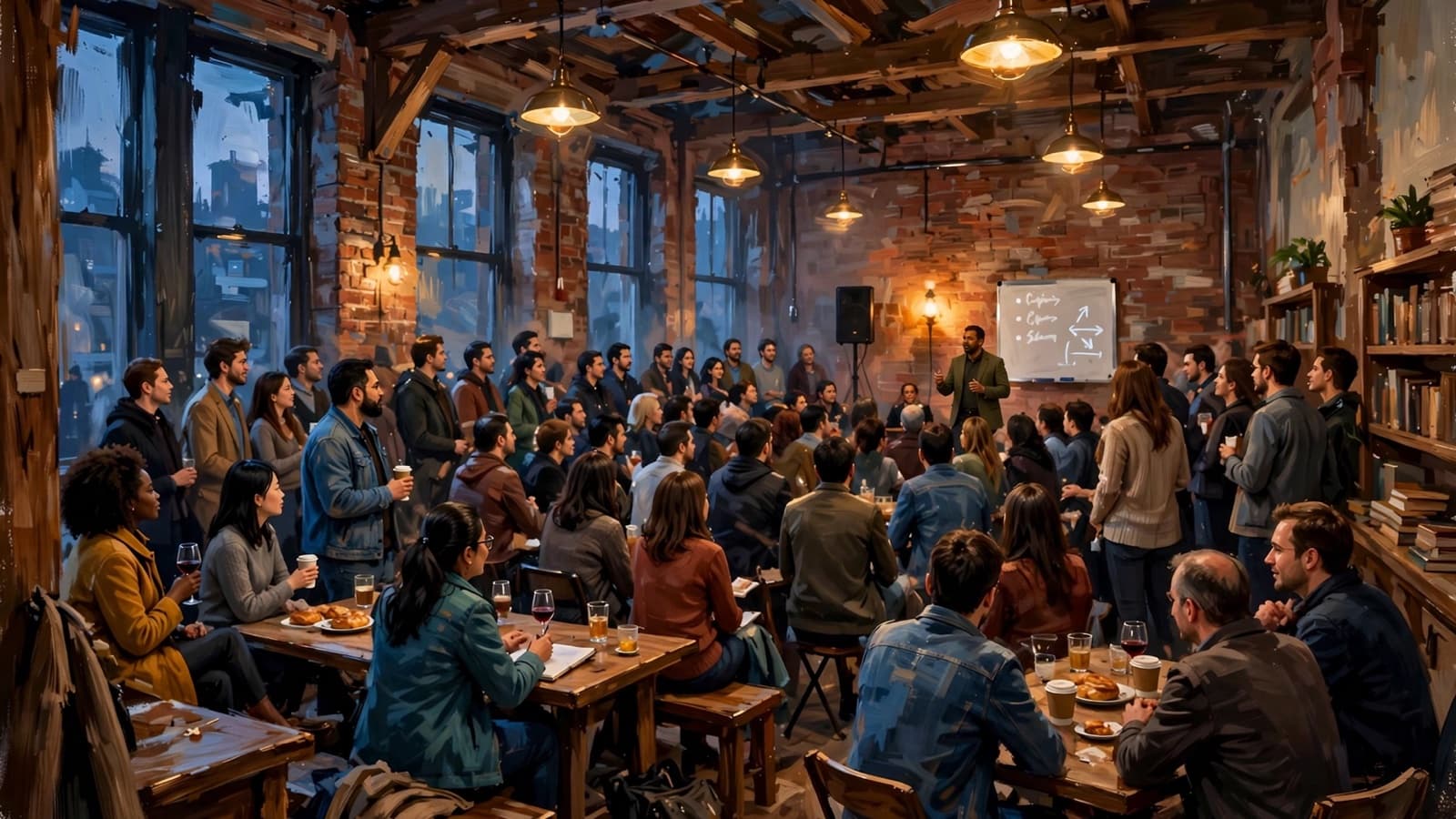
A talk night with drinks, sixty people, partner venue
One speaker, one exercise the audience takes part in, drinks and snacks. The venue is free, so the money goes to food and drink.
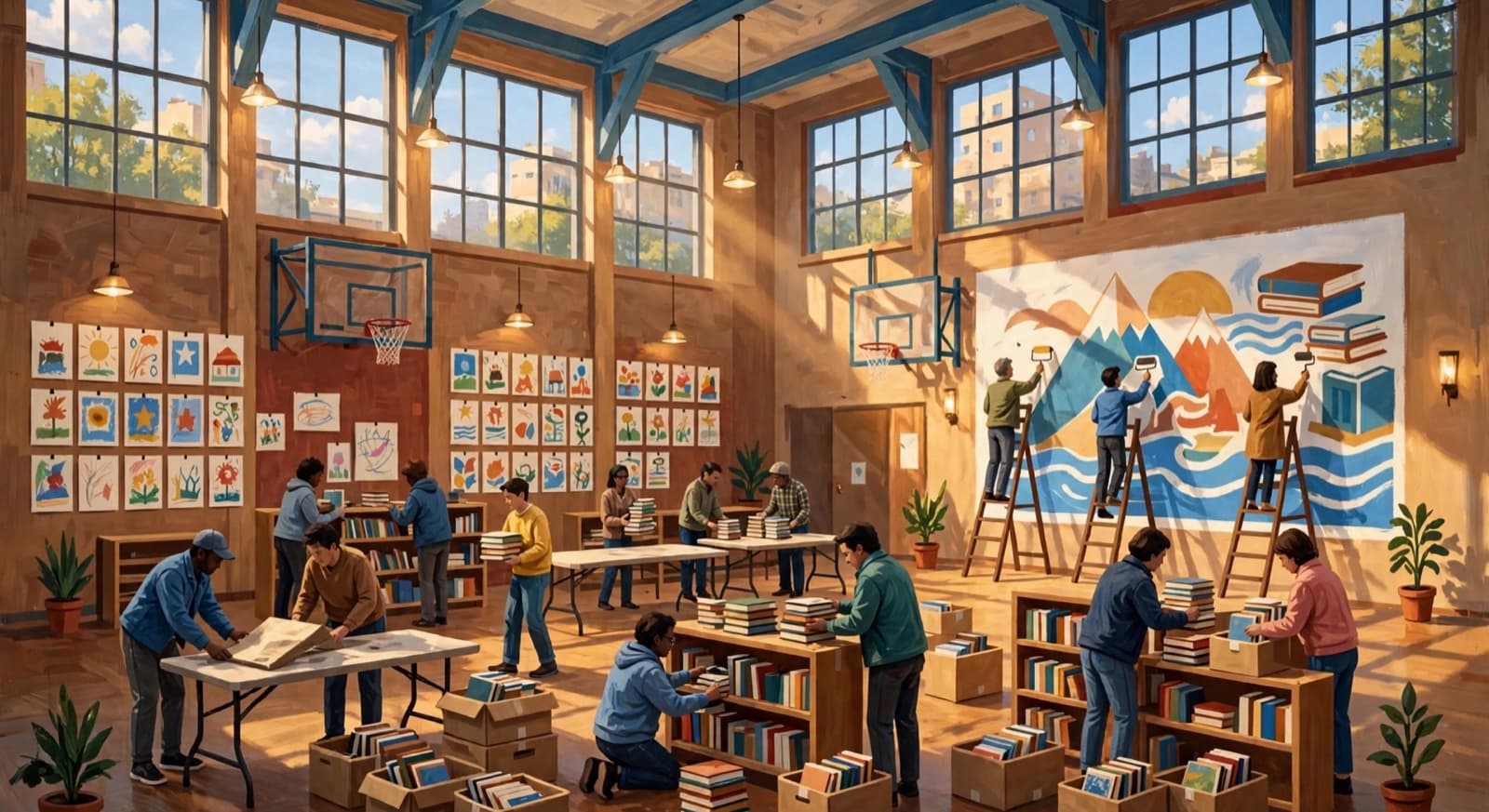
A volunteer work day with lunch
Crews of leaders and the next generation do a day's work for an organization we admire, then eat together.
About $2,500
Dinner for forty, or a rented room
A catered dinner for forty with beer and wine, or a rented room for eighty with food, or a facilitated format that needs materials and a host.
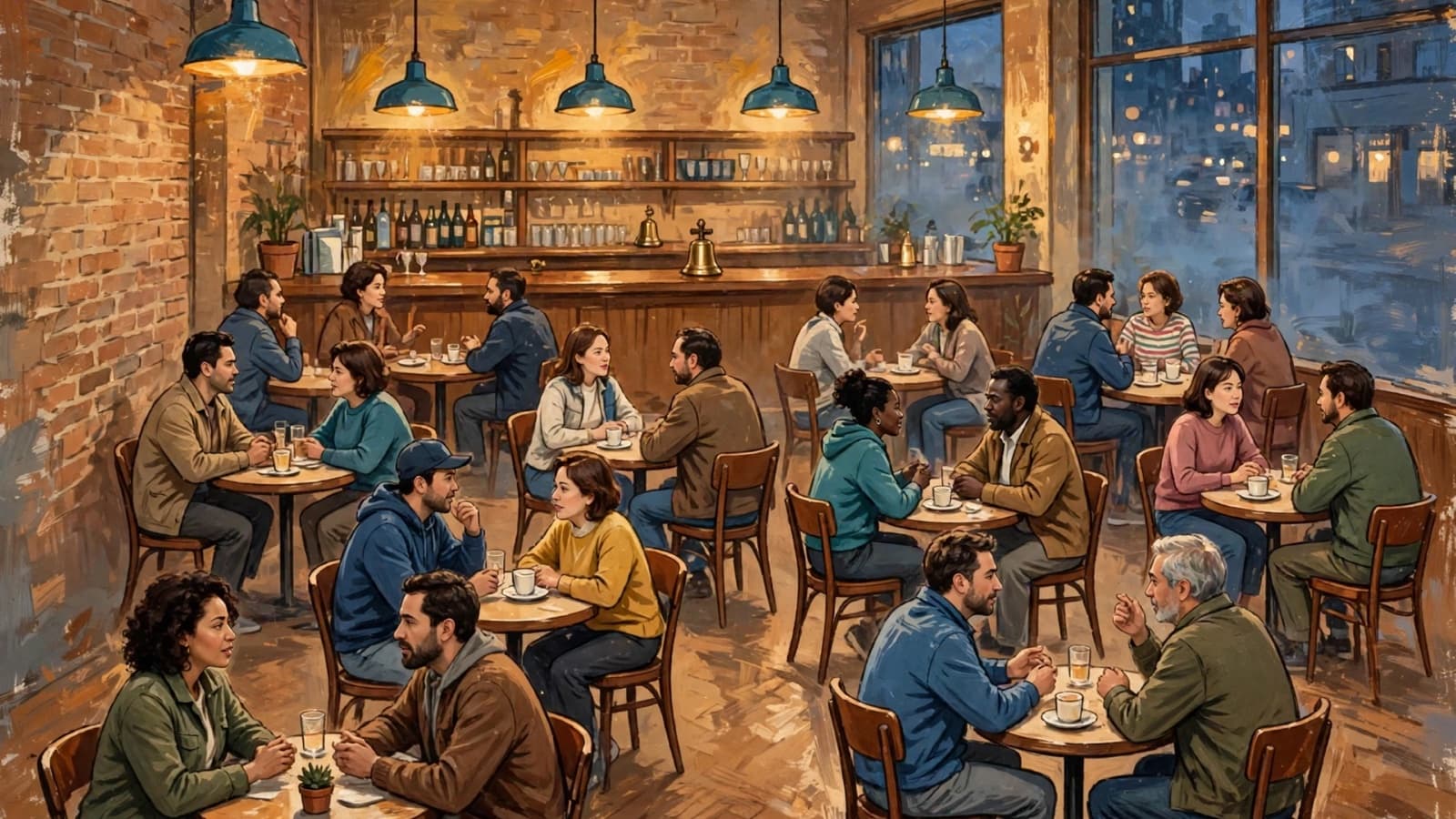
Speed mentorship with dinner
Twenty leaders across the table from twenty of the next generation, fifteen minutes each, then a bell, then dinner together.
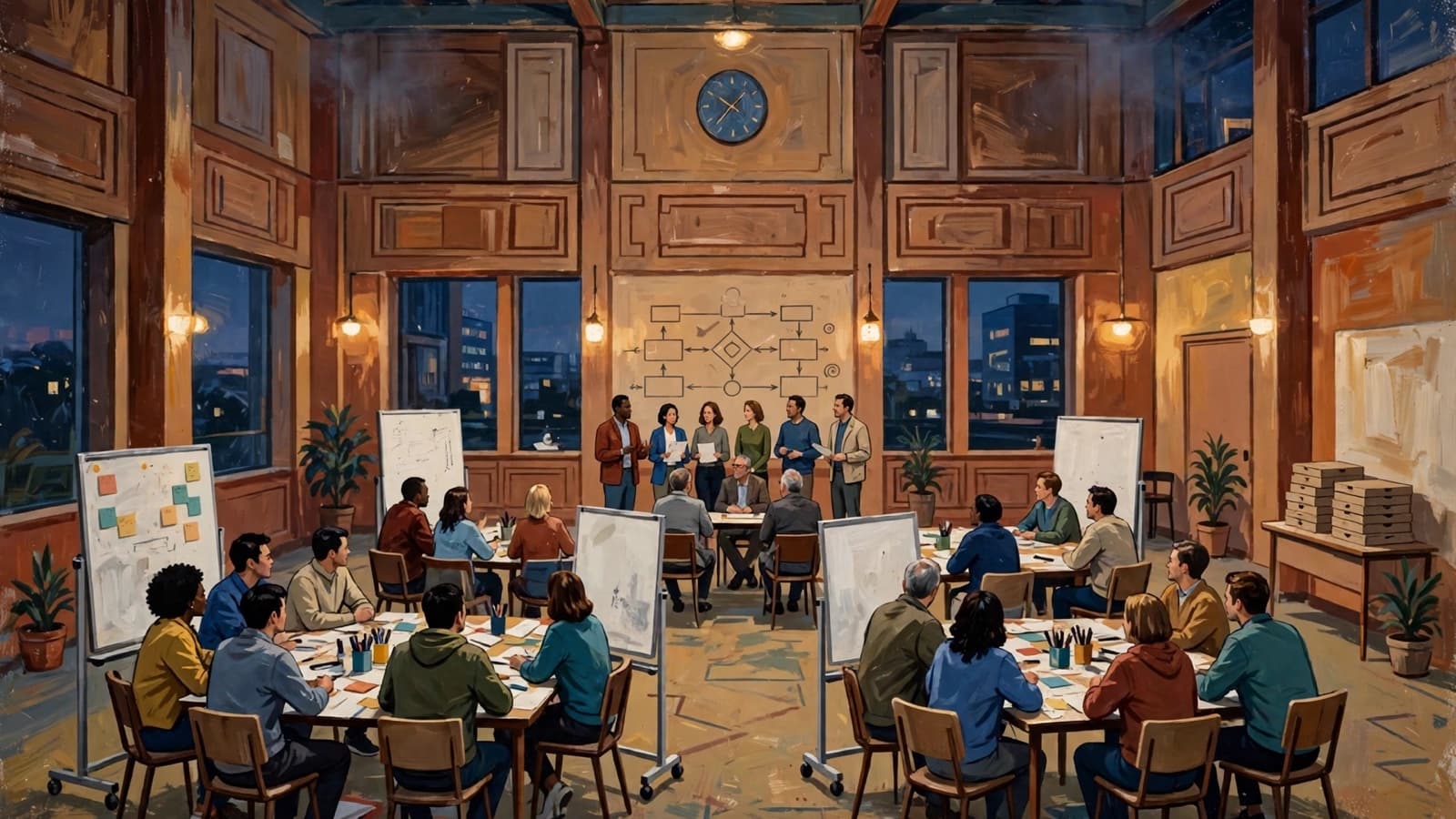
A one-night problem-solving contest
A leader puts one real problem on the wall, teams get three hours, and the leader picks the plan they take back on Monday. Food for the teams and a prize.
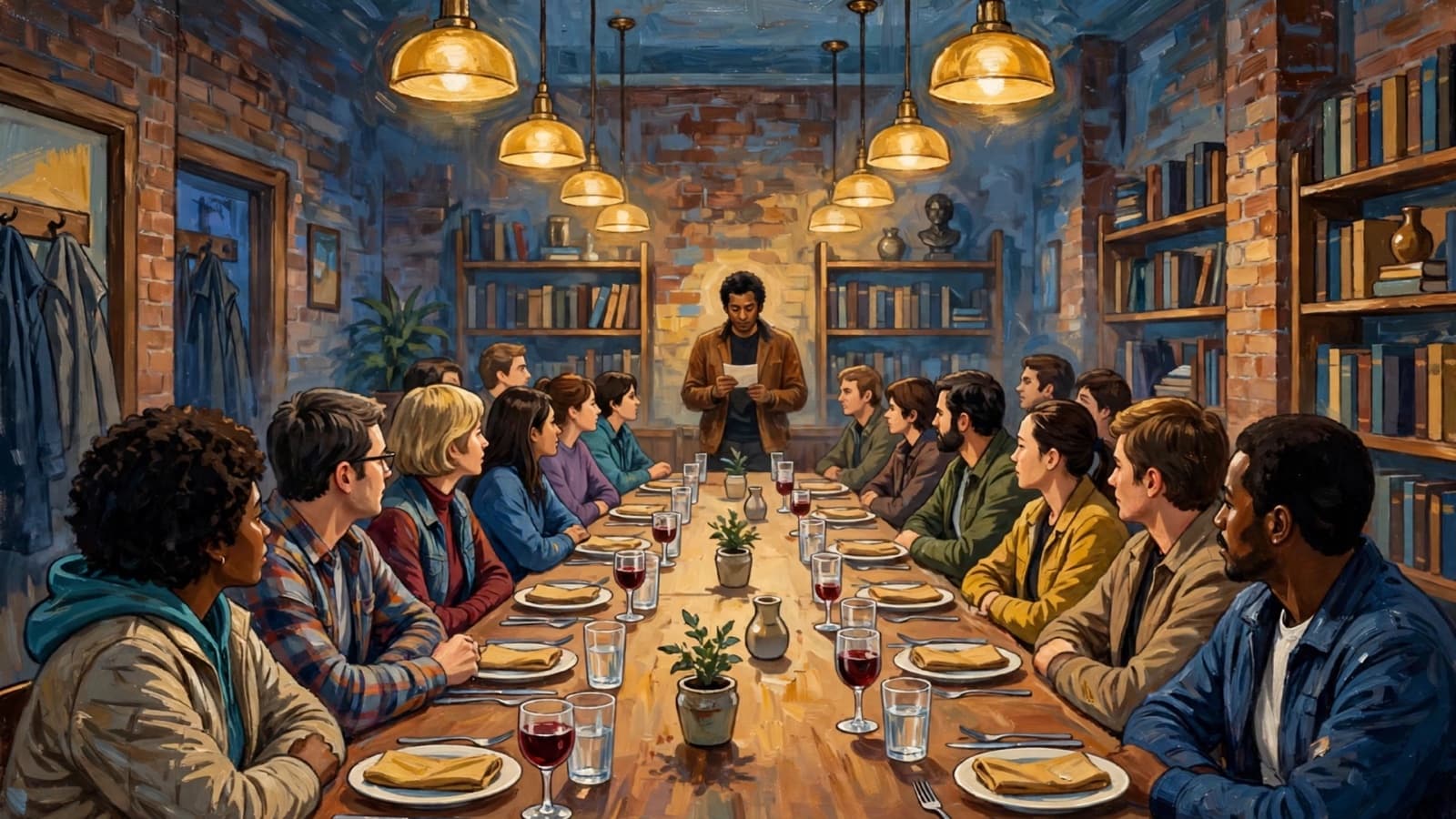
A murder mystery dinner for forty
Every guest has a part and the clues are spread so thin nobody solves it alone. Dinner, a kit, and a host.
$5,000+
A rented hall and a hundred or more
A hall for a hundred to two hundred, food, and some production. The events that need a room too big to borrow.
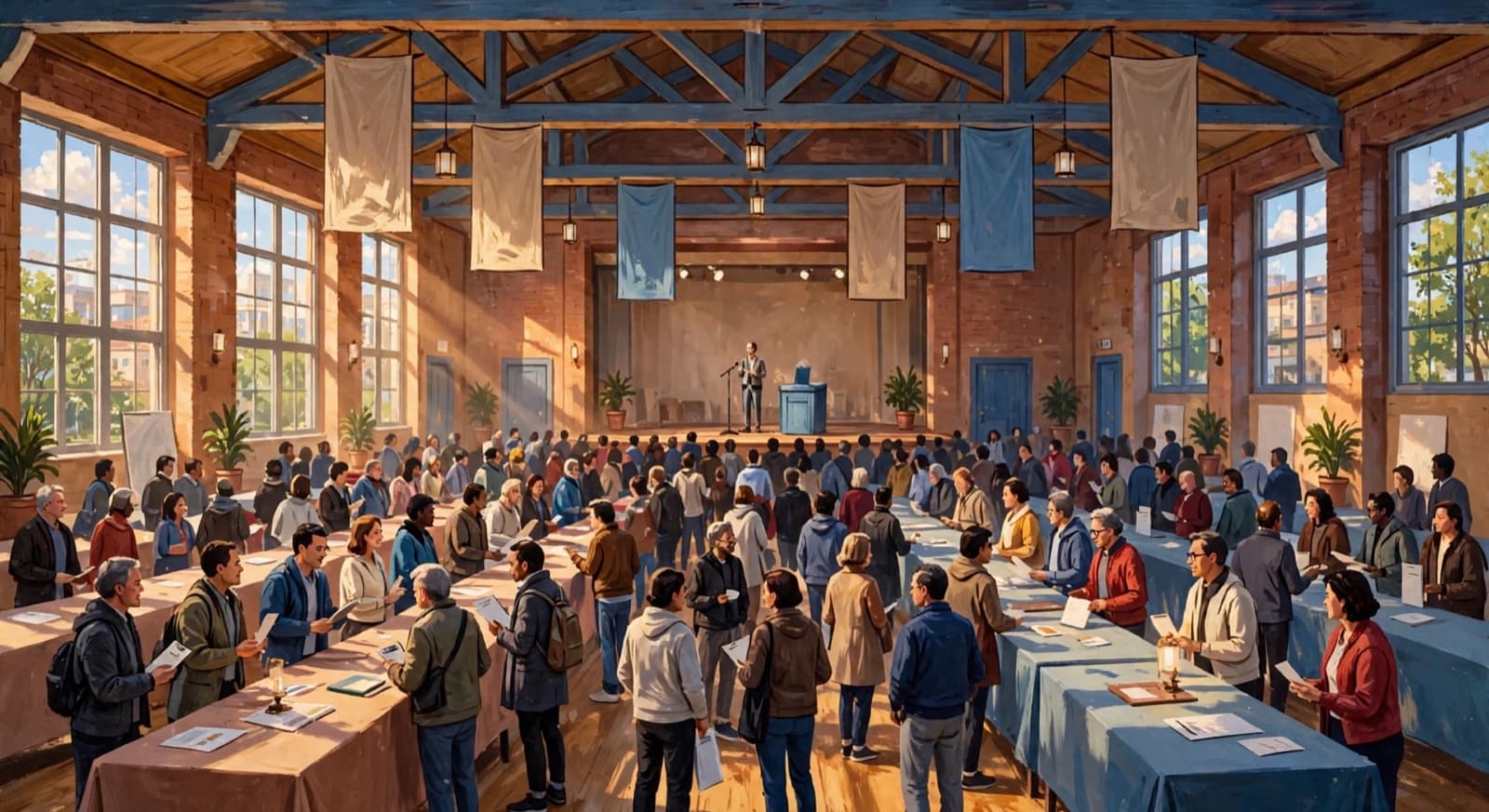
A showcase of twenty organizations we admire
Each gets a table and four minutes at the microphone, the room votes, and the winner takes the door money.
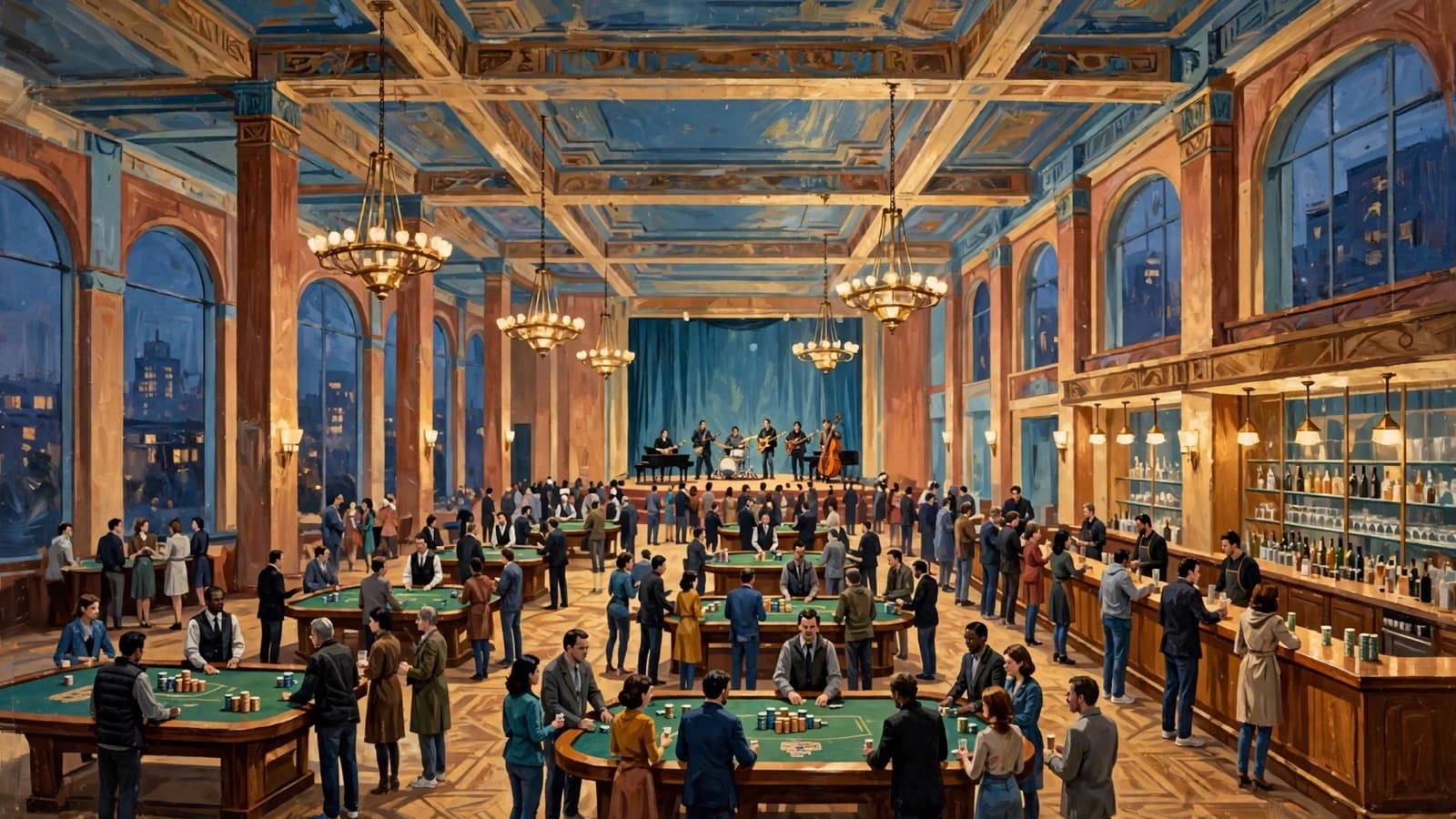
A casino night fundraiser
Tables and dealers, a dress code, and one last hand at midnight for the whole room's pot. Guests buy their own drinks.
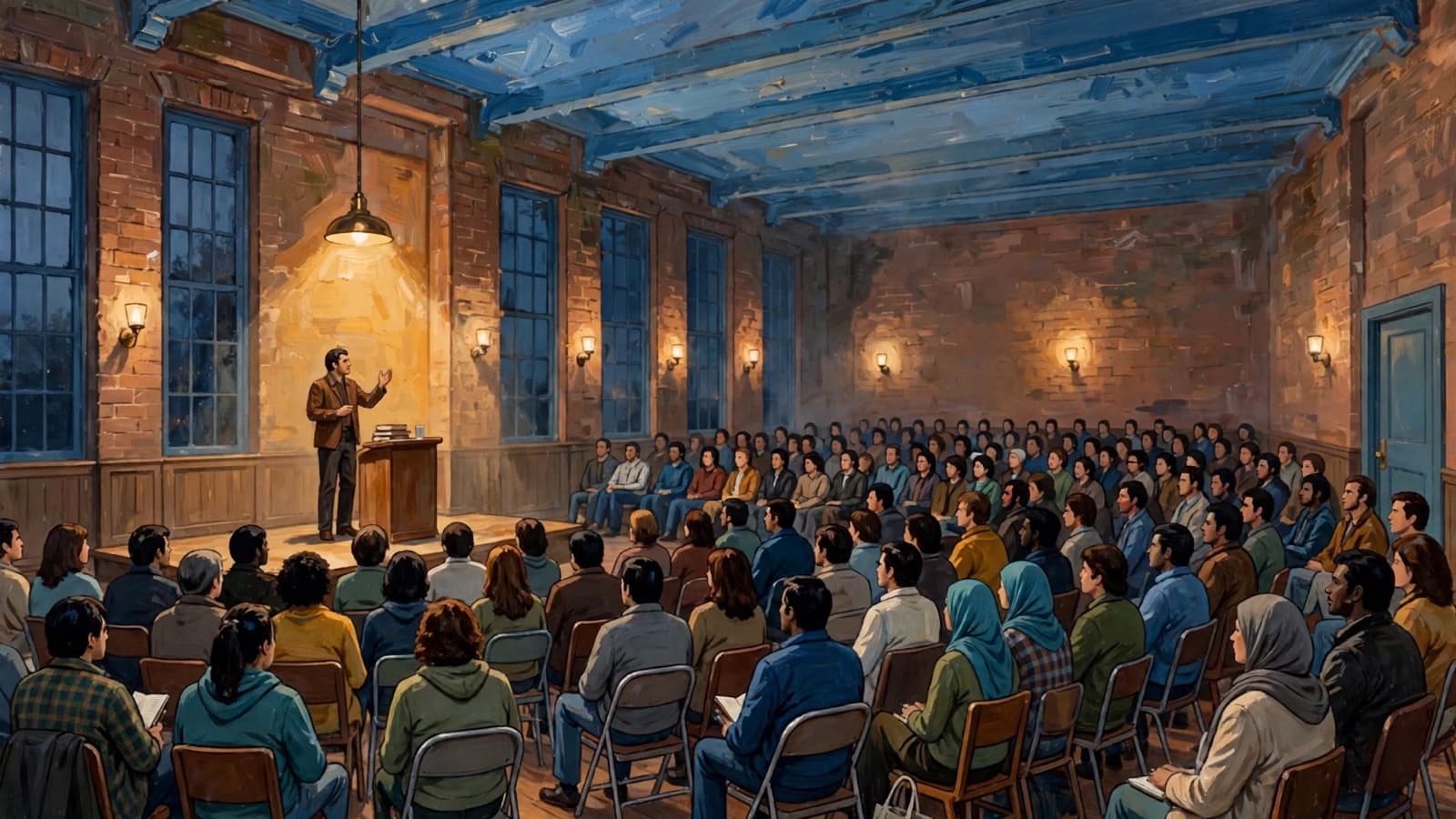
A public open night with a speaker
A hundred and fifty people, most of whom have never heard of No Tribe. This is how people in the city first come across it.
These are typical D.C. costs: catering runs $40 to $70 a head, a rented room for eighty $800 to $2,500 an evening, a hall for two hundred $2,500 and up. The free level costs nothing but time: a borrowed room and a potluck.
05
A year with no funding, and a year with some.
The series starts either way. But the two years are not the same series at different sizes. Funding changes what kinds of events are possible, and whether I am the only person running them.
With no funding
The free tier, run on my time, borrowed rooms, and partners.
What is possible
- A monthly potluck series that grows by one guest each time.
- The organizers' meetup every other month, and the partnerships that come from it.
- A problem clinic in a borrowed room whenever a leader has one.
- Co-hosted events with groups that already have momentum.
- About twelve events. A core group that has met each other several times.
The limits
- No dinners. The events where people get to know each other best are the ones I cannot afford.
- Only the rooms people will lend, on the nights they are free.
- No bigger nights, so nothing that puts the city in the room.
- One person doing everything.
With funding
The free tier continues. On top of it, two things get unlocked.
Events that need money
- Dinners: speed mentorship with dinner for forty, a murder mystery dinner, small dinners with the people I most need advice from.
- Rented rooms when the right room matters, and a contest night with food and a prize.
- Two or three bigger nights a year: a showcase of organizations, a fundraiser, a public open night.
- A photographer at the nights that matter, so the series has a record.
Help
- A part-time producer to run the bigger nights with me. This is the biggest change money makes.
- With help, about twenty events a year instead of twelve, and each one better run: greeted at the door, matched in advance, followed up.
Roughly: a dinner-sized night costs $2,500, a big night $5,000, and a part-time producer for a year about $8,000. My time is never in the budget.
06
Not everything from scratch.
Some of this I will build from nothing. But D.C. already has groups with momentum, and where I can add something to what they do, I would rather co-host events with them than build the same audience again from scratch.
The builders' club is an example. I added what I knew about running events, the club grew, and I am now connected to everyone in it. The meetup for organizers is where I expect to find the next partners, which is why co-hosted events are part of the unfunded year.
07
The first year, quarter by quarter.
Months 1 to 3
Map and start small
Finish mapping venues and organizers. First potluck. First organizers' meetup. Every event ends with a list of who to invite next.
Months 4 to 6
Partners and the next generation
First co-hosted events. Speed mentorship in a partner's space. The dinner series continues.
Months 7 to 9
Partner organizations
A work day or a showcase with partner organizations. If funded, the first bigger night.
Months 10 to 12
Repeat and decide
The events that worked run again. I count who came back, and decide whether the community is ready for a room of its own.
08
What I count at the end of the year.
Not attendance alone. The point is whether people come back and start doing things together.
Came twice
People who came to two or more events. The community is the people who return.
Hosted
Leaders who ran or hosted an event themselves. These are the likely future members.
Matched
Pairs from the next generation and the leaders who kept talking after the bell.
Partners
Groups that co-ran an event and would do it again.
09
A first space.
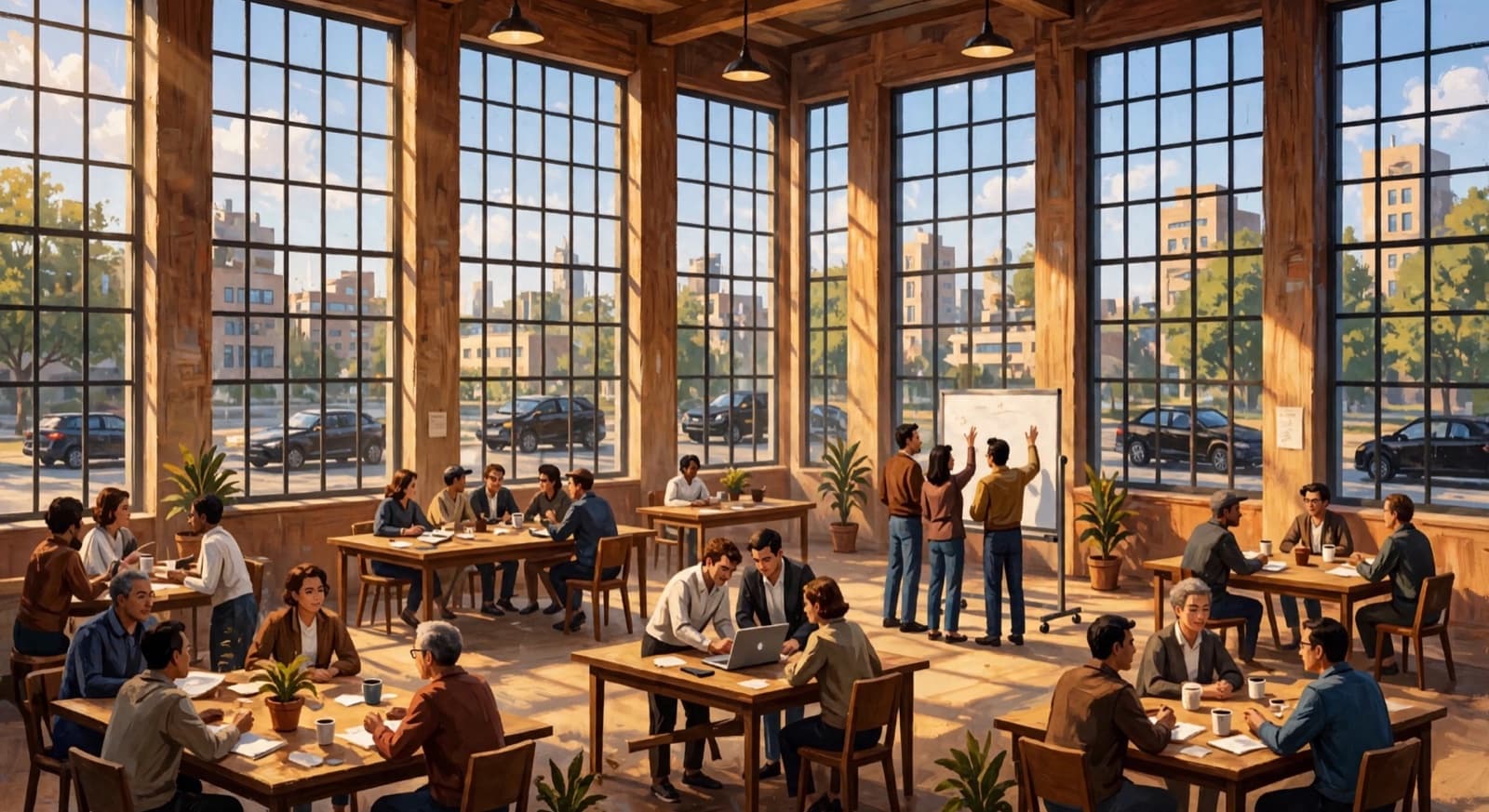
The cheapest space that is ours is one room, about 2,000 square feet, on a busy street. Open plan, furniture on wheels. Coworking by day, events by night, and the same people at both.
It is the smallest version of the building: one floor of it, with everything the events need and nothing else. Back-of-napkin numbers for a leased ground-floor space in a neighborhood like Shaw or Navy Yard.
~$200k
To open. Deposit, fit-out, furniture, permits.
~$300k
A year to run. Rent, two staff, and the events.
2,000
Square feet. One open room on a busy street, leased.
10
The full building.
Three floors and a roof, 15,000 to 20,000 square feet. Classrooms, a hall for public nights, a kitchen, a library, and tables for members during the day.
Two ways to get there: lease an older building and fit it out, or buy one and renovate it. The running costs are nearly the same either way. Rounded numbers for 18,000 square feet.

~$8M
To build it out, whether leased or bought.
~$800k
A year in rent and charges, if leased.
~$8M
To buy it instead, before the renovation.
~$1M
A year to run, before rent.
11
What could go wrong.
Nobody comes back
The clearest signal, and the reason I count returns rather than attendance. If the second-visit rate is low by month six, I change the events, not the plan.
Borrowed rooms fall through
Every event has a second venue lined up, and the funded year has money for a rented room when it matters.
One person is running everything
True today. Partners who co-host, leaders who host their own nights, and a producer at the bigger ones are how it stops being true.
Where the numbers come from.
Rough estimates at 2026 Washington, D.C. rates, checked in September 2026. If you have better numbers, I would like to have them.
Questions.
Everything on this page is an estimate that can be checked. If you want the spreadsheet behind it, or think a number is wrong, write to me.
peter.elam@notribe.org